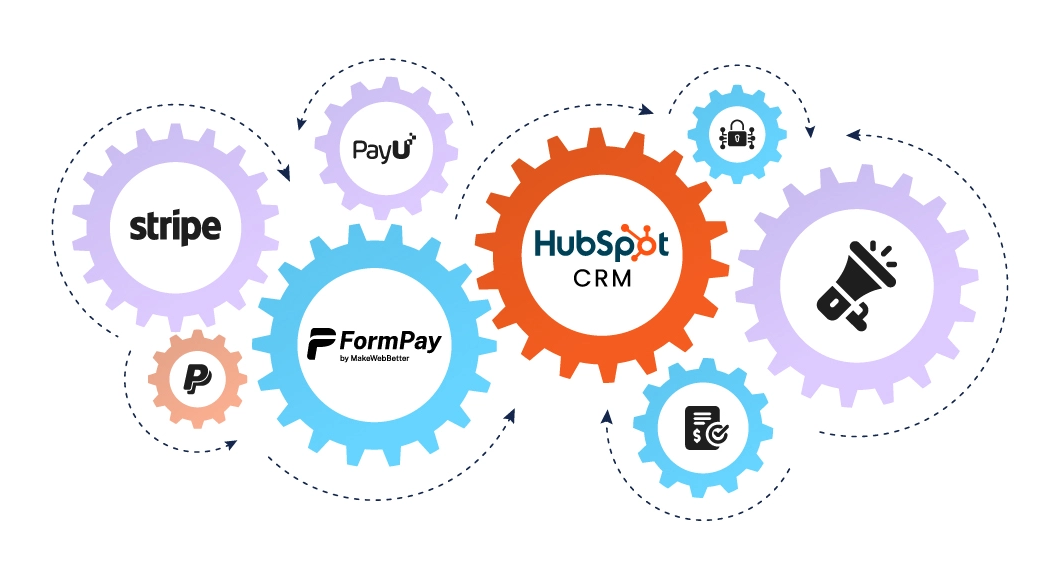
Seven billion dollars for an AI model routing company. That’s the number that stopped a lot of people mid-scroll this week, as Stripe’s acquisition of OpenRouter landed alongside news that Anthropic has turned its first profit. For RevOps teams, though, the Stripe deal carries a specific implication that’s easy to miss in the broader AI frenzy: Stripe is building toward becoming the financial intelligence layer that sits underneath your entire go-to-market stack, not just your checkout page.
This is a good moment, then, to take a hard look at what Stripe actually offers CRM and sales teams today – where it genuinely helps, where it falls short, and whether product-led growth companies in particular are leaving real money on the table by treating Stripe as a back-office tool.
What Stripe Actually Does Inside a CRM Workflow
Most sales teams think of Stripe as the thing that processes the card. That’s underselling it considerably. When properly integrated with a CRM like Salesforce, HubSpot, or Pipedrive, Stripe surfaces payment behaviour directly into the account record – failed charges, subscription upgrades, dunning events, trial conversions – and that data completely changes how a rep manages a renewal conversation.
The core integration features worth knowing about include:
- Real-time subscription events pushed to CRM contact and deal records, so reps see a downgrade before the customer emails in
- Revenue recognition data that feeds directly into Annual Recurring Revenue (ARR) dashboards without a manual export
- Trial-to-paid conversion triggers that can fire sequences in your marketing automation the moment a free user enters a card
- Churn signals from failed payment retries, which are genuinely one of the earliest indicators of an account at risk – earlier, often, than anything the CSM notices
- Invoice and billing history accessible to AEs during expansion calls, removing the awkward “let me check with finance” delay
Stripe Billing also supports metered and usage-based pricing models, which matters a lot if your company has moved away from flat-rate SaaS. Reps don’t have to manually recalculate deal value mid-cycle. The numbers just update.
Where Stripe Integration Earns Its Keep for RevOps
The strongest case for deeply integrating Stripe with your CRM is churn rate reduction on the involuntary side. Involuntary churn – customers who leave because a payment failed, not because they chose to – is notoriously underreported in RevOps reviews. When Stripe’s dunning data lives inside your CRM, CSMs can intervene with a human touch before the automated retry sequence exhausts itself and cancels the account. It’s a straightforward win that doesn’t require any product change.
For teams running a sales cycle that involves a free trial or freemium tier, the trial conversion trigger is probably the single highest-ROI integration point available. Speed matters enormously at that moment. A rep who gets a Slack alert the second a trial user enters payment details and calls within the hour closes at a materially different rate than one who checks a report at end of day.
The math circulating in this week’s SaaStr and 20VC discussion suggests AI reaching $600B in revenue requires roughly $100K of token spend per engineer and 30% fewer engineers industry-wide – a signal that the tools absorbing routine data work, like payment reconciliation and CRM hygiene, will see faster adoption than anyone is currently pricing in.
That context matters for how RevOps teams should think about Stripe’s roadmap. With OpenRouter now inside Stripe, the plausible next step is AI-native payment intelligence – routing queries across models to generate account health scores, flag expansion signals, or predict which accounts are three months from churning based on usage and payment pattern together. It’s not available today, but that’s the direction the acquisition points.
Honest Limitations – What Stripe Doesn’t Handle Well
Stripe isn’t a CRM. That sounds obvious, but it creates real gaps that RevOps teams tend to discover painfully rather than proactively.
The native CRM connectors are functional but not deep. Stripe’s official Salesforce connector syncs core objects reasonably well, but custom objects and complex sales pipeline configurations often require middleware – Zapier, Census, or a custom API build. That adds cost and maintenance burden that small RevOps teams genuinely feel. HubSpot’s native Stripe integration is tidier for SMBs, but even it doesn’t surface the granular event-level data that makes the integration truly powerful for forecasting.
There’s also a meaningful gap in how Stripe handles multi-product, multi-entity enterprise accounts. If your ideal customer profile is a mid-market or enterprise buyer with multiple subsidiaries, Stripe’s account hierarchy tooling doesn’t map cleanly to how CRMs structure parent-child account relationships. You can work around it. It isn’t elegant.
Sales forecasting with Stripe data also requires real discipline. Billing dates and recognised revenue don’t always align with how AEs are logging expected close dates, which creates Monthly Recurring Revenue (MRR) reporting confusion if finance and RevOps aren’t tightly aligned on definitions. This isn’t exactly Stripe’s fault – but it’s a problem Stripe alone can’t solve.
Who Should Prioritise This Integration Right Now
If your company sells on a subscription or usage model, processes more than roughly $500K in annual payment volume through Stripe, and has at least one person responsible for Net Revenue Retention (NRR) as a primary metric – this integration should be near the top of your technical backlog. The ROI on reducing involuntary churn and accelerating trial conversion is measurable within a single quarter.
If you’re primarily enterprise, selling large upfront contracts with manual invoicing, the case is weaker. Stripe Invoicing works, but it’s not where the product shines compared to purpose-built enterprise billing tools. The CRM integration value follows the same curve.
For a broader comparison of how Stripe stacks up against other tools in the billing-to-CRM category, the Tool Reviews section of CRM Daily covers several of the alternatives. You can also browse the full CRM Tools Directory if you’re evaluating the wider stack.
The open question this week’s acquisition leaves on the table: if Stripe succeeds in building an AI-native financial intelligence layer using OpenRouter’s model-routing infrastructure, does that make the CRM the less important system of record for revenue data – or does it make the integration between the two more critical than ever? That’s not rhetorical. RevOps teams building their data architecture right now genuinely have to pick a side.